Where People Go Wrong
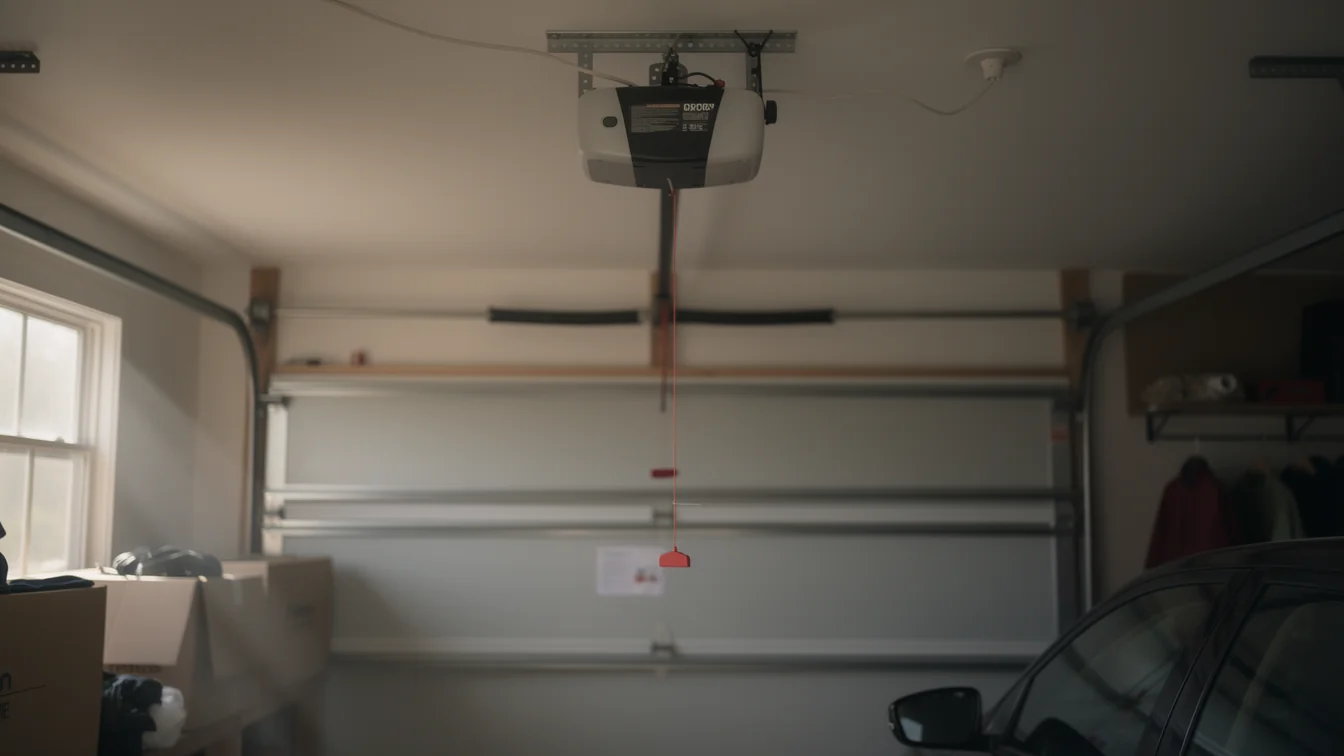
The mistake we see most is treating a 16-foot double door like it's the same animal as a single 9-foot door, just bigger. It isn't. A wide door has twice the surface area catching the same gust, and most of the double doors going up in this town during the 1960s and 70s shipped as single-layer steel with no center reinforcement strut - that bracing wasn't standard practice yet. Owners assume the tracks and springs are the whole story. They're not. Without a horizontal strut across the middle of a wide section, the panel has nothing stopping it from bowing outward and back in under load, over and over, every time the wind picks up.
The second mistake is ignoring the rollers and hinges because the door 'still closes fine.' A door can operate normally for years while the steel is quietly fatiguing at the stress points - usually right where the strut should be but isn't. By the time you notice a visible wave in the panel, that section has already flexed thousands of times. Reinforcement after the fact is a cheap fix. Replacing a cracked panel because nobody caught it is not.
The Situation
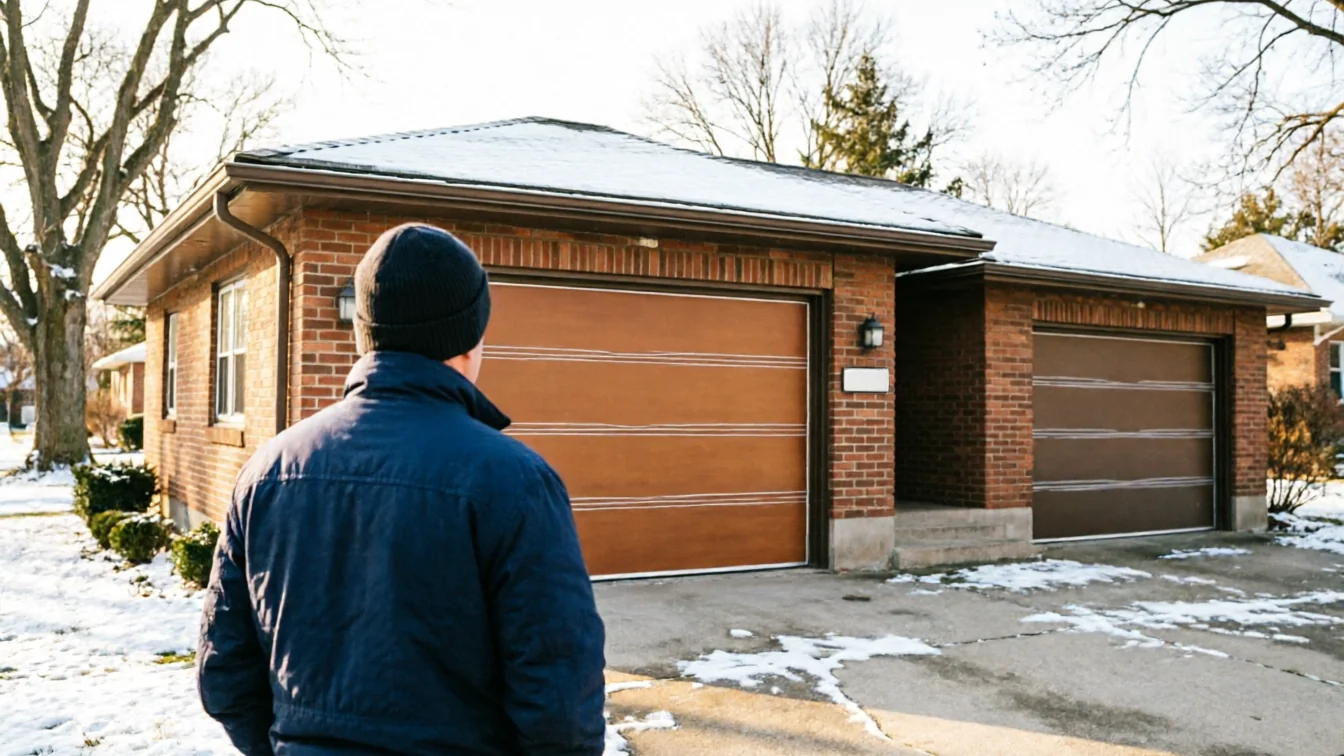
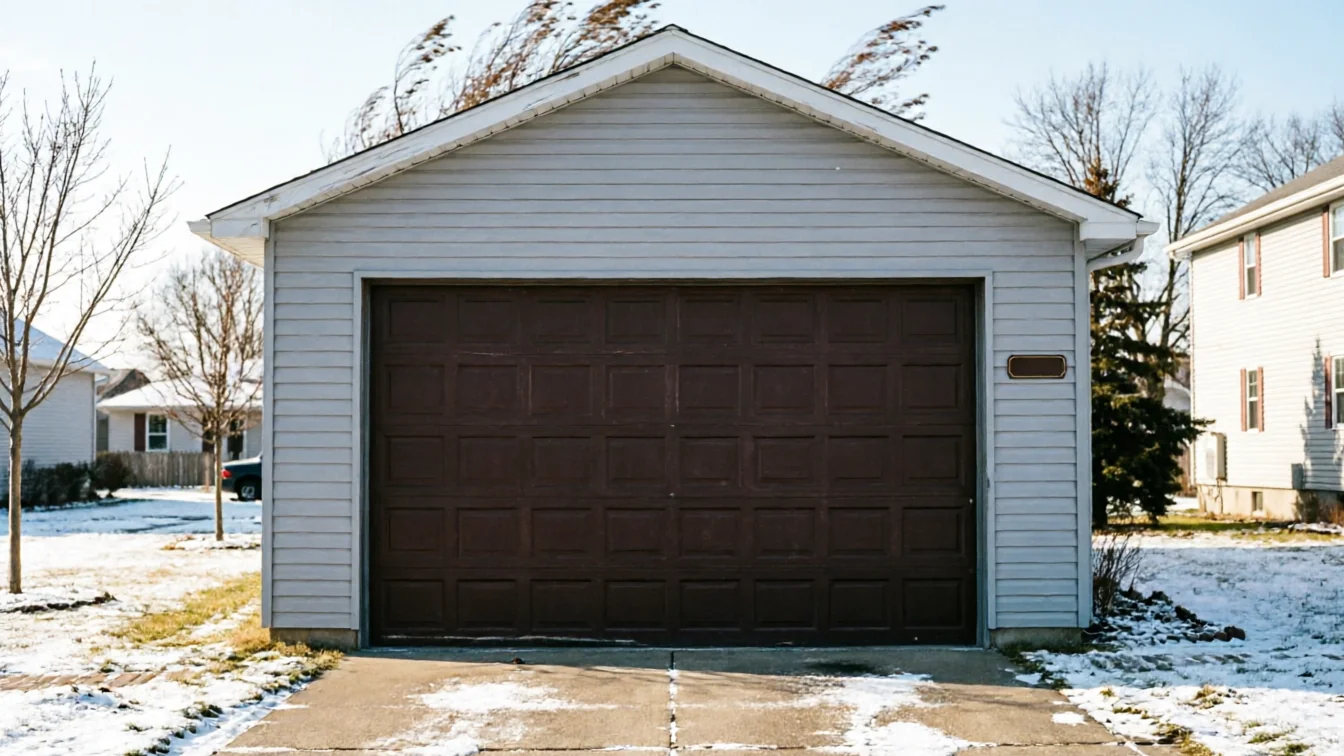
Housing in this part of town runs from 1938 to 2003, with the median landing at 1977 - squarely inside the decades when wide double doors were common but wind-load bracing on garage doors was not yet a given. Across the broader area, most of the stock skews to that same 1960s-70s window. That matters here specifically because it means a large share of the double-door garages in Highland Park are the exact age and build type where a center strut was left out or added as a thin afterthought.
With 101,625 owner-occupied houses across the service area, a lot of them built in that same stretch, this isn't a one-off problem affecting a handful of unlucky garages - it's a pattern tied directly to when the neighborhood was built. If you've driven through Highwood or Bannockburn and noticed a double door rattling or visibly flexing in a gust, it's the same housing-era issue showing up a couple miles away, not a coincidence. The fix usually isn't a new door. It's bringing the existing one up to a standard that didn't exist when it was installed.
What Local Conditions Do
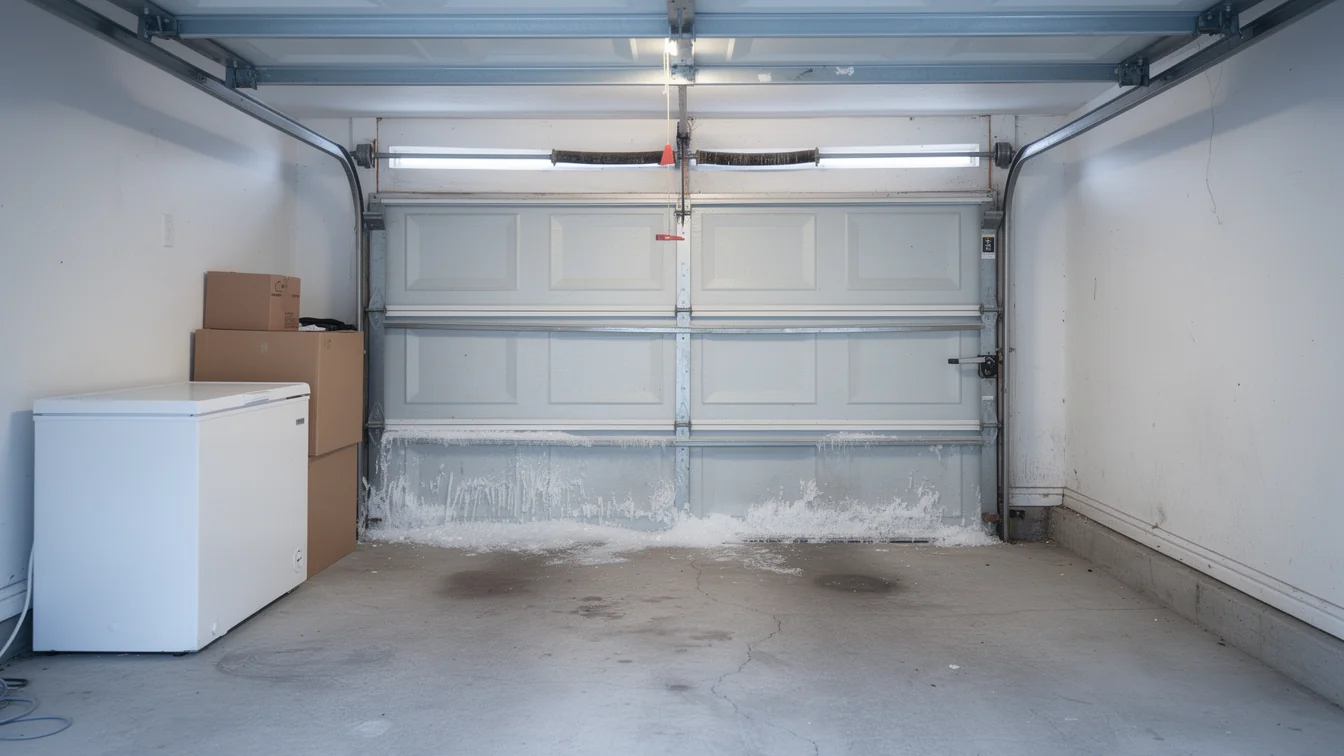
This is a cold-but-moderate climate, not a hurricane zone, so the wind problem here isn't a door blowing in during one storm - it's slow fatigue. Steel contracts in cold weather, and a panel that already flexes under wind pressure flexes more when the metal is stiffer and less forgiving in January than it is in July. Nylon rollers harden with cold too, which changes how much resistance the door sees as it travels, and a wide door under uneven resistance twists slightly on its tracks instead of moving square.
Put those two things together - an unbraced 1960s or 70s double door and a cold-moderate climate that stiffens the steel for a good chunk of the year - and you get a specific failure pattern: hairline stress cracks near the top corners of the end sections, track brackets that work loose from repeated flex, and hinges that wear unevenly because the panel isn't moving as one flat surface anymore. None of that shows up on a door this age in a climate that doesn't put the steel through that seasonal stiffening.
What It Costs
We don't have a flat number to hand you here, and we're not going to make one up. What a wind-bracing job costs depends on whether the door just needs a strut added across the problem section or whether years of flex have already cracked a panel, in which case you're replacing that section instead of reinforcing it. A quick look at the door tells us which category it's in.
The honest limitation: if a wide door is already visibly bowed or has a crack running through a panel, adding a strut at that point doesn't fix it - the steel is already compromised. Reinforcement works as prevention on a door that's still sound, not as a repair on one that's already failed. That's the call we make on site, not over the phone, because two doors built the same year can be in very different shape depending on how they were maintained.
Talk to a local pro
Garage door trouble in Highland Park?
Same-day service with honest, upfront quotes.